The DEAR Project brings together students, teachers, scholars, and industry experts to explore the evolving landscape of digital ethics and responsibilities through a dynamic series of events. From interactive workshops to global symposium and panel discussions, our events provide a platform for thought leadership, critical dialogue, and the exchange of best practices in ethical technology use.
Join us as we navigate the challenges and opportunities of digital transformation in education, ensuring that emerging technologies—such as artificial intelligence, big data, and digital learning analytics—are incorporated ethically and responsibly.
Upcoming Events
Stay updated with our latest events and mark your calendar for insightful discussions, interactive workshops, and networking opportunities.

Past Highlights
Missed an event? Catch up on key takeaways, recorded sessions, and expert insights from our past discussions.

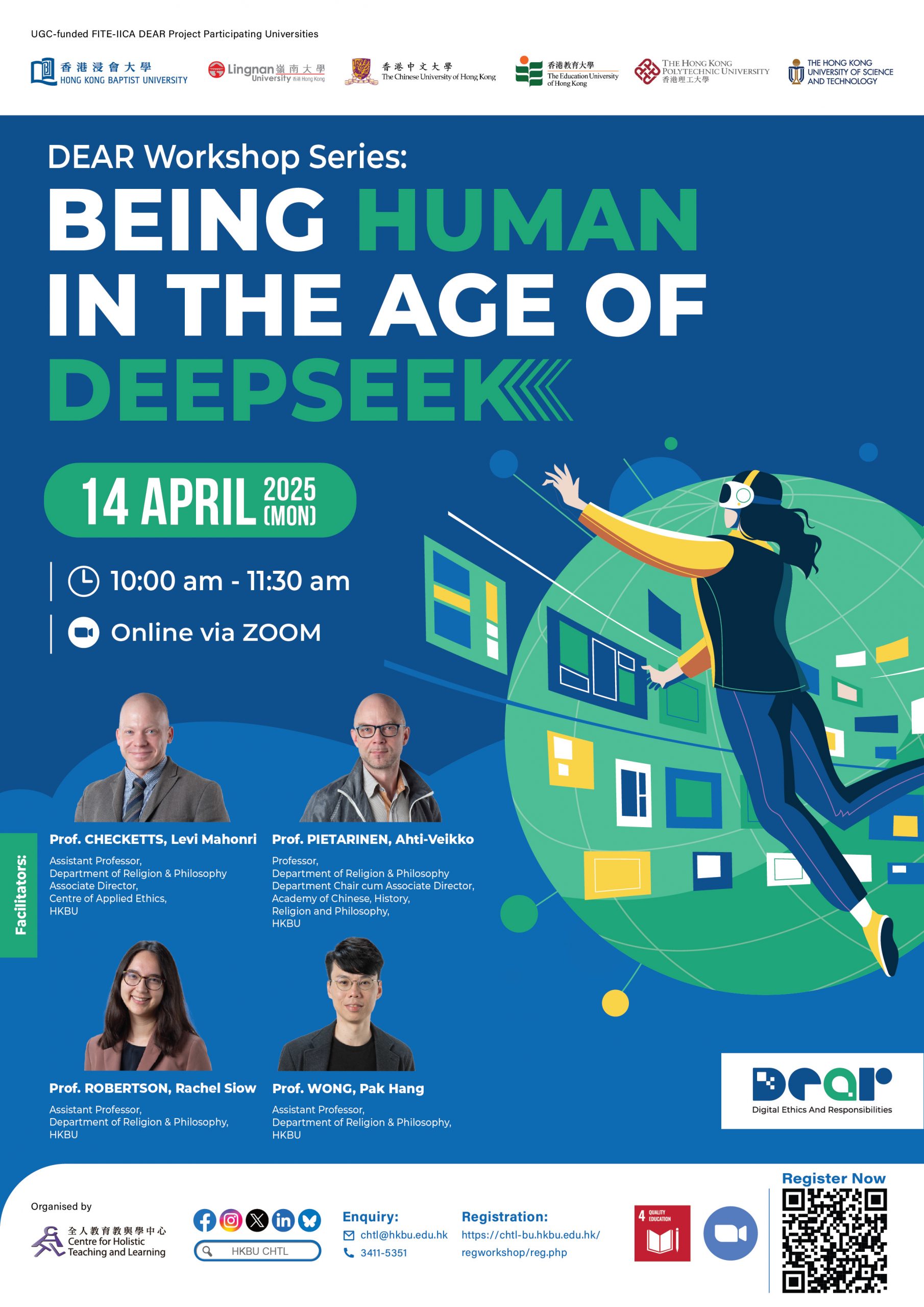
TALES 8 – DEAR Workshop Series: Being Human in the Age of DeepSeek
Date & Time:
14 April 2025 (Monday), 10:00 am – 11:30 am
Venue:
Online via Zoom
Facilitators:
Prof Levi Mahonri CHECKETTS
Department of Religion & Philosophy
Hong Kong Baptist University
Prof Ahti-Veikko Juhani PIETARINEN
Department of Religion & Philosophy
Hong Kong Baptist University
Prof Rachel Siow ROBERTSON
Department of Religion & Philosophy
Hong Kong Baptist University
Prof Pak-hang WONG
Department of Religion & Philosophy
Hong Kong Baptist University
Abstract:
Join Prof. Levi Mahonri Checketts, Prof. Ahti-Veikko Juhani Pietarinen, Prof. Rachel Siow Robertson, and Prof. Pak-hang Wong for a unique conversation on humanity, ethics, and AI, featuring thought-provoking presentations and a dynamic panel discussion.
Sustainable Development Goals (SDG) Mapping
Workshop Materials
Handouts (PDF) | Recording
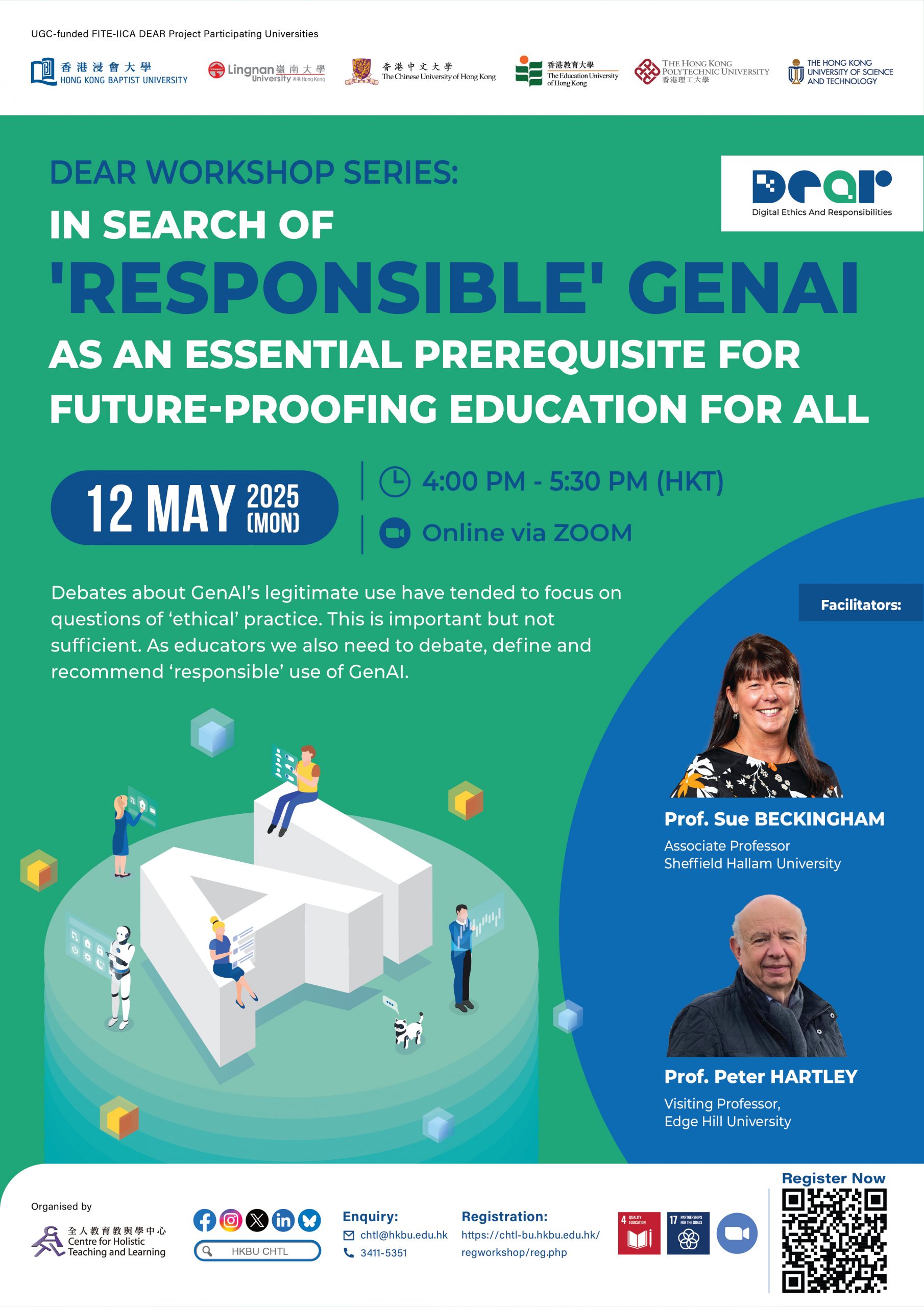
TALE 11 – DEAR Workshop Series: In search of ‘Responsible’ Generative AI (GenAI) as an essential prerequisite for future-proofing education for all
Date & Time:
12 May 2025 (Monday), 4:00 pm – 5:30 pm
Venue:
Online via Zoom
Facilitators:
Prof Peter HARTLEY
Visiting Professor
Edge Hill University
Prof Sue BECKINGHAM
Associate Professor
Sheffield Hallam University
Abstract:
Debates about GenAI’s legitimate use have tended to focus on questions of ‘ethical’ practice. This is important but not sufficient. As educators we also need to debate, define and recommend ‘responsible’ use of GenAI.
Sustainable Development Goals (SDG) Mapping
Workshop Materials
Handouts (PDF) | Recording
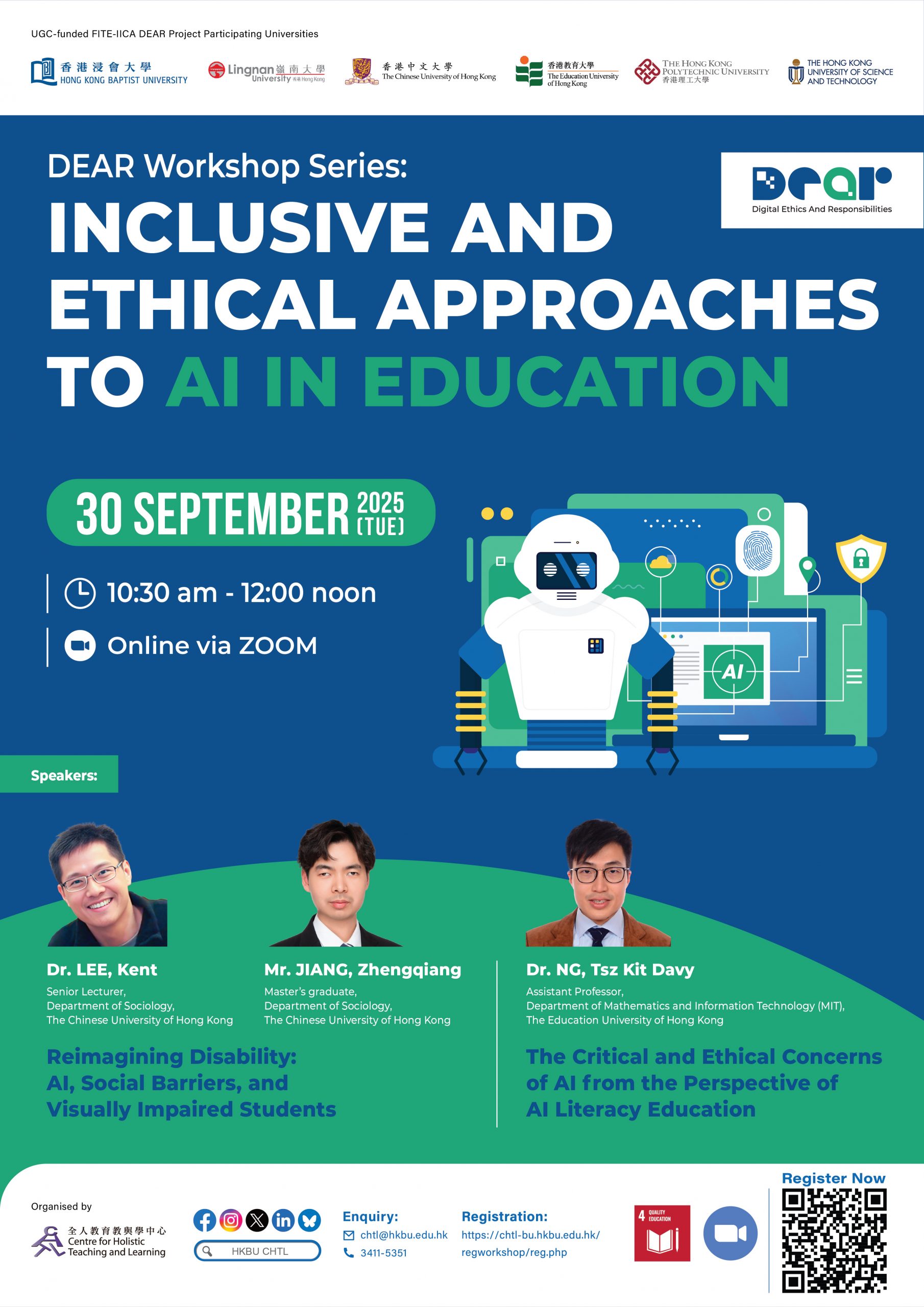
TALES 1 – DEAR workshop series: Inclusive and Ethical Approaches to AI in Education
Date & Time:
30 September 2025 (Tuesday), 10:30 am – 12:00 nn
Venue:
Online via Zoom
Speakers from CUHK:
Dr. Kent LEE
Senior Lecturer
Department of Sociology
The Chinese University of Hong Kong
Mr. Zhengqiang JIANG
Master’s Graduate
Department of Sociology
The Chinese University of Hong Kong
Title:
Reimagining Disability: AI, Social Barriers, and Visually Impaired Students
Abstract:
This presentation explores emerging research on AI applications for students with disabilities. Early studies often stem from the medical model of disability, which emphasizes how technological advancements help restore disabled students to a “fully functioning” state. While this approach highlights the rehabilitative potential of AI, it tends to overlook how AI can assist students in navigating the social barriers that contribute to their disabilities.
Drawing on in-depth interviews with a dozen visually impaired undergraduate and postgraduate students, Jiang will discuss the implications of AI through the lens of the social model of disability. This perspective emphasizes how AI can empower visually impaired individuals to overcome the often subtle, exclusionary practices embedded in everyday life.
Speaker from EdUHK:
Dr. Tsz Kit Davy NG
Assistant Professor
Department of Mathematics and Information Technology (MIT)
The Education University of Hong Kong
Title:
The Critical and Ethical Concerns of AI from the Perspective of AI Literacy Education
Abstract:
As artificial intelligence becomes increasingly integrated into our daily lives, understanding its ethical implications is essential for both educators and learners. This talk will first explore the conceptualization of Generative AI literacy through an ethical lens. Some effective AI literacy practices will be discussed that emphasize critical thinking and ethical awareness in school and higher education settings. Then, the critical and ethical concerns will be addressed regarding the use of AI, which include lazy learning, authentic expression, socialization, ethical implications, equity and fairness, intense competition, and the potential decentering humans. Finally, the talk will highlight the need to adopt new forms of AI and to update our understanding of AI literacy in a timely manner to embrace emerging technologies.
Sustainable Development Goals (SDG) Mapping
Workshop Materials
Handouts (PDF) | Recording
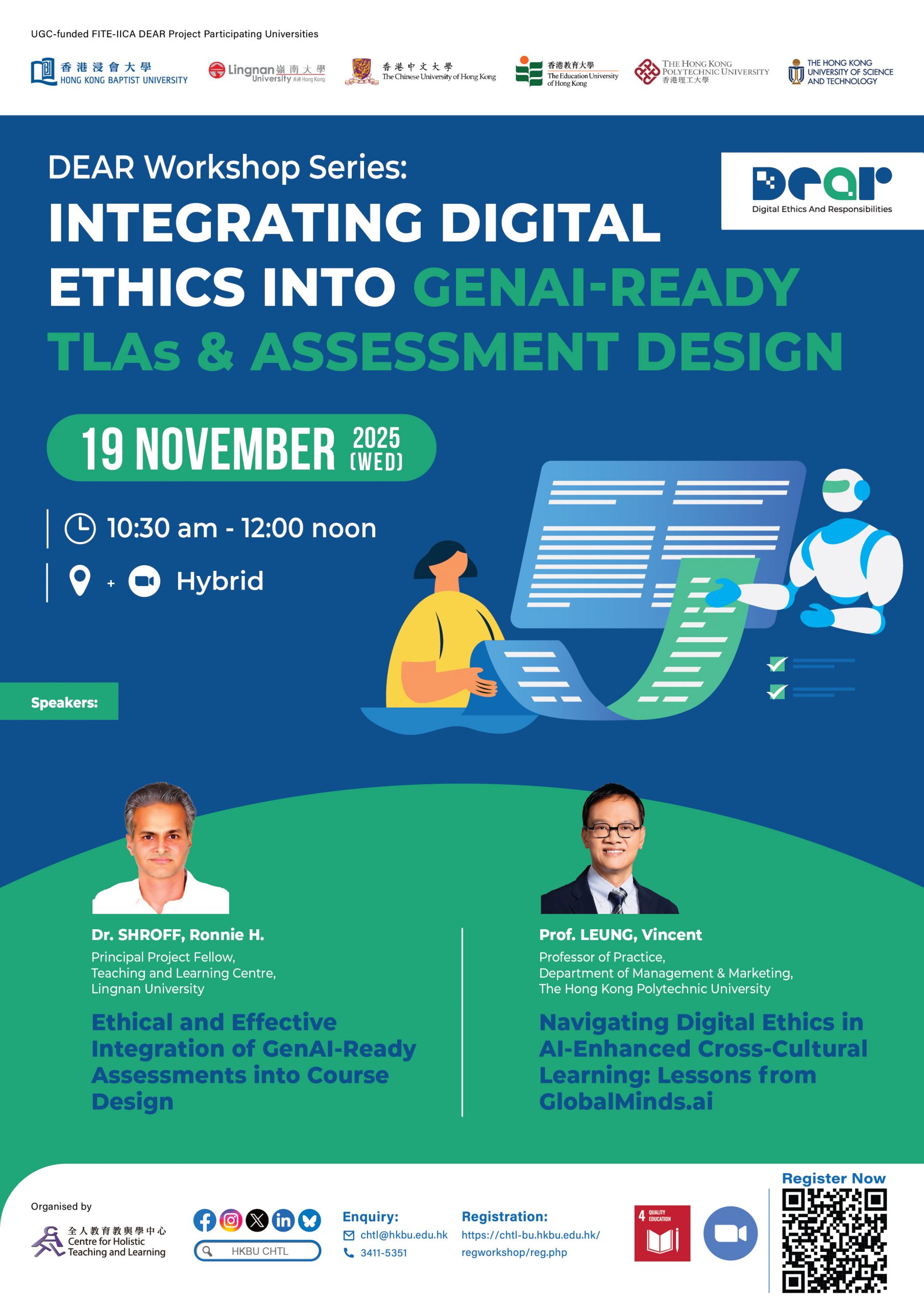
TALES 7 – DEAR workshop series: Integrating Digital Ethics into GenAI-Ready TLAs & Assessment Design
Date & Time:
19 November 2025 (Wednesday), 10:30 am – 12:00 nn
Venue:
Online via Zoom & AAB301 & 302, Academic and Administration Building, Baptist University Road Campus, Hong Kong Baptist University
Speakers from LU:
Dr. Ronnie H. Shroff
Principal Project Fellow
Teaching and Learning Centre
Lingnan University
Title:
Ethical and Effective Integration of GenAI-Ready Assessments into Course Design
Abstract:
This workshop explores the transformative potential of generative AI (GenAI) in revamping course assessment design. Participants will apply the AI Assessment Scale (AIAS) framework to convert traditional assessments into GenAI-ready formats that emphasise academic integrity and higher-order skills, focusing on process over product. Through group activities and an example course assessment, participants will apply pedagogical models (e.g., authentic, problem-based, collaborative and experiential) to transform traditional assessments into context-specific GenAI-ready formats aligned with Bloom’s Taxonomy. The workshop also introduces the IDEAL-Gen.AI (Instructional Design Enhanced Active Learning through Generative Artificial Intelligence) platform, which transforms instructional design by leveraging GenAI, enabling the creation of tailored discipline and course specific learning activities, lesson plans and assessment tasks that align with specific pedagogical needs. By the end of the workshop, participants will be able to generate ethical, engaging, outcome-based and context-specific GenAI-ready assessments that foster academic integrity and higher-order skills.
Speaker from PolyU:
Prof. Vincent Leung
Professor of Practice
Department of Management & Marketing
The Hong Kong Polytechnic University
Title:
Navigating Digital Ethics in AI-Enhanced Cross-Cultural Learning: Lessons from GlobalMinds.ai
Abstract:
This 30-minute interactive workshop is designed for higher education faculty to explore the critical ethical dimensions of integrating artificial intelligence into global virtual classrooms. Through a case study centred on the “Culturally-Adaptive Algorithm Dilemma,” participants will identify and analyse key challenges such as algorithmic bias, data privacy, and cultural stereotyping. The session introduces the CARE framework (Context, Accountability, Rights, Equity) as a practical tool for ethical decision-making. Attendees will collaborate to develop actionable strategies for responsible AI implementation, aiming to foster greater cross-cultural awareness and ensure equitable learning experiences. Key takeaways emphasise the importance of transparency, cultural humility, and continuous ethical reflection in the age of AI-powered education.
Sustainable Development Goals (SDG) Mapping
Workshop Materials
Handouts (PDF) | Recording
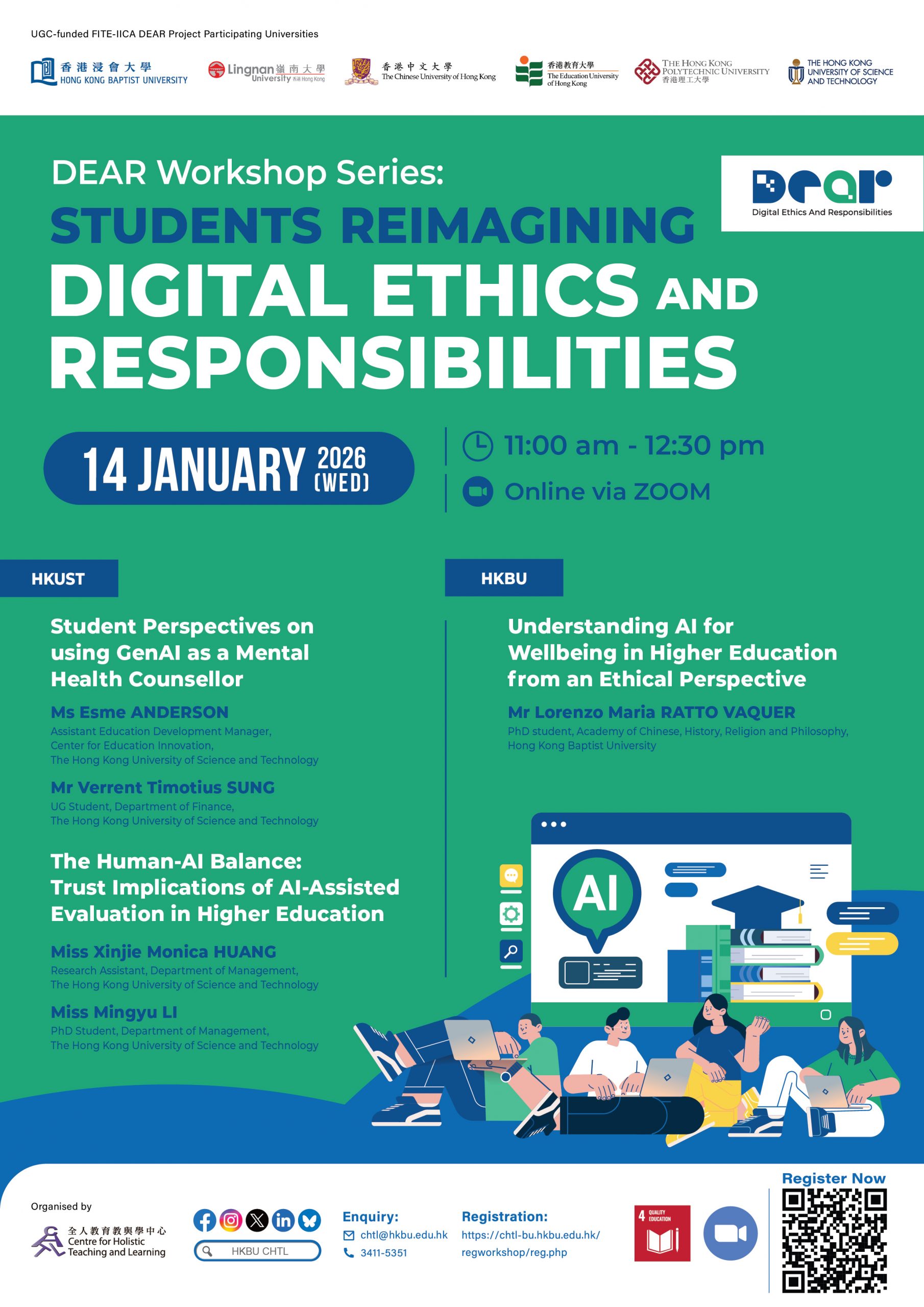
TALES 1 – DEAR Workshop Series: Students Reimagining Digital Ethics and Responsibilities
Date & Time:
14 January 2026 (Wednesday), 11:00 am to 12:30 pm
Venue:
Online via Zoom
Speakers from HKUST:
Ms Esme ANDERSON
Assistant Education Development Manager
Center for Education Innovation
The Hong Kong University of Science and Technology
Mr Verrent Timotius SUNG
UG Student
Department of Finance
The Hong Kong University of Science and Technology
Title:
Student Perspectives on using GenAI as a Mental Health Counsellor
Abstract:
This student-initiated project sheds light on a critical aspect of university life and responsibility – mental health – by exploring HKUST students’ perspectives on using Generative AI (GenAI) as a mental health counselor. An initial survey revealed that while many students are open to using GenAI for counseling or venting, concerns about bias and inaccurate responses persist. Follow-up qualitative interviews uncovered that cultural and family stigma around mental health may lead students to turn to GenAI, particularly in an increasingly digital society where personal connections are increasingly fragmented. In his sharing, Verrent will unpack these responses and invite ideas and interpretations from workshop participants.
Speakers from HKUST:
Miss Xinjie Monica HUANG
Research Assistant
Department of Management
The Hong Kong University of Science and Technology
Miss Mingyu LI
PhD Student
Department of Management
The Hong Kong University of Science and Technology
Title:
The Human-AI Balance: Trust Implications of AI-Assisted Evaluation in Higher Education
Abstract:
This project addresses a critical gap: how students respond to faculty use of Generative AI (GenAI) in assessment. Across a series of experiments utilizing status attribution in workplace and educational contexts, this project has explored and uncovered how an individual using AI can be perceived as less competent, which, in turn, leads to a loss of perceived status. At HKUST, we conducted a survey of 602 students, assessing their views on faculty competence, satisfaction, and status in scenarios involving AI use in marking assessments. Findings indicate that students perceive faculty who use AI for evaluation as less competent and are less likely to recommend their courses, highlighting the complex implications of AI adoption in education and the importance of considering student perspectives in its implementation.
Speaker from HKBU:
Mr Lorenzo Maria RATTO VAQUER
PhD Student
Academy of Chinese, History, Religion and Philosophy
Hong Kong Baptist University
Title:
Understanding AI for Wellbeing in Higher Education from an Ethical Perspective
Abstract:
This talk will present a theoretical framework for wellbeing in the age of AI that brings together Amartya Sen’s capability approach and Shannon Vallor’s notion of moral deskilling. It starts from a definition of wellbeing as the expansion of capabilities, i.e. the real freedoms to be and to do what one has reason to value. I distinguish between wellbeing achievements, the outcomes actually attained, and wellbeing freedom, the genuine opportunities to obtain them. From this, AI is seen as an entity that reshapes capability sets depending on conversion factors: the personal, social, and environmental conditions that determine whether a technology becomes lived freedom.
Moral deskilling, as presented by Vallor, poses a primary threat to wellbeing freedom. When AI structures perception in advance, shapes choice environments, and automates inquiry and judgment, it can weaken core human capabilities such as practical reason, authorship, and affiliation. This can produce a twofold pattern: greater achievements in terms of speed, accuracy, and personalization, alongside reduced freedoms in terms of autonomy, dignity, and the capacity for public reasoning. AI supports wellbeing when it serves as scaffolding that invites the exercise of discernment, dialogue, and responsible self-direction, rather than replacing them.
I propose a capability-based criterion for evaluating AI: its value depends on whether it durably expands opportunities to deliberate well, to participate in the shared authorship of common worlds, and to contest decisions that affect one’s life. The implications for higher education follow consequently. If the aim of education is to cultivate wellbeing freedom, then practices, rules, and forms of AI governance should be designed to support the exercise of practical reason, responsibility in the use of the technology. The decisive question is not how AI can boost educational outputs, but how it can help people and institutions to live, learn, and reason well together.
Sustainable Development Goals (SDG) Mapping
Workshop Materials
Handouts (PDF) | Recording
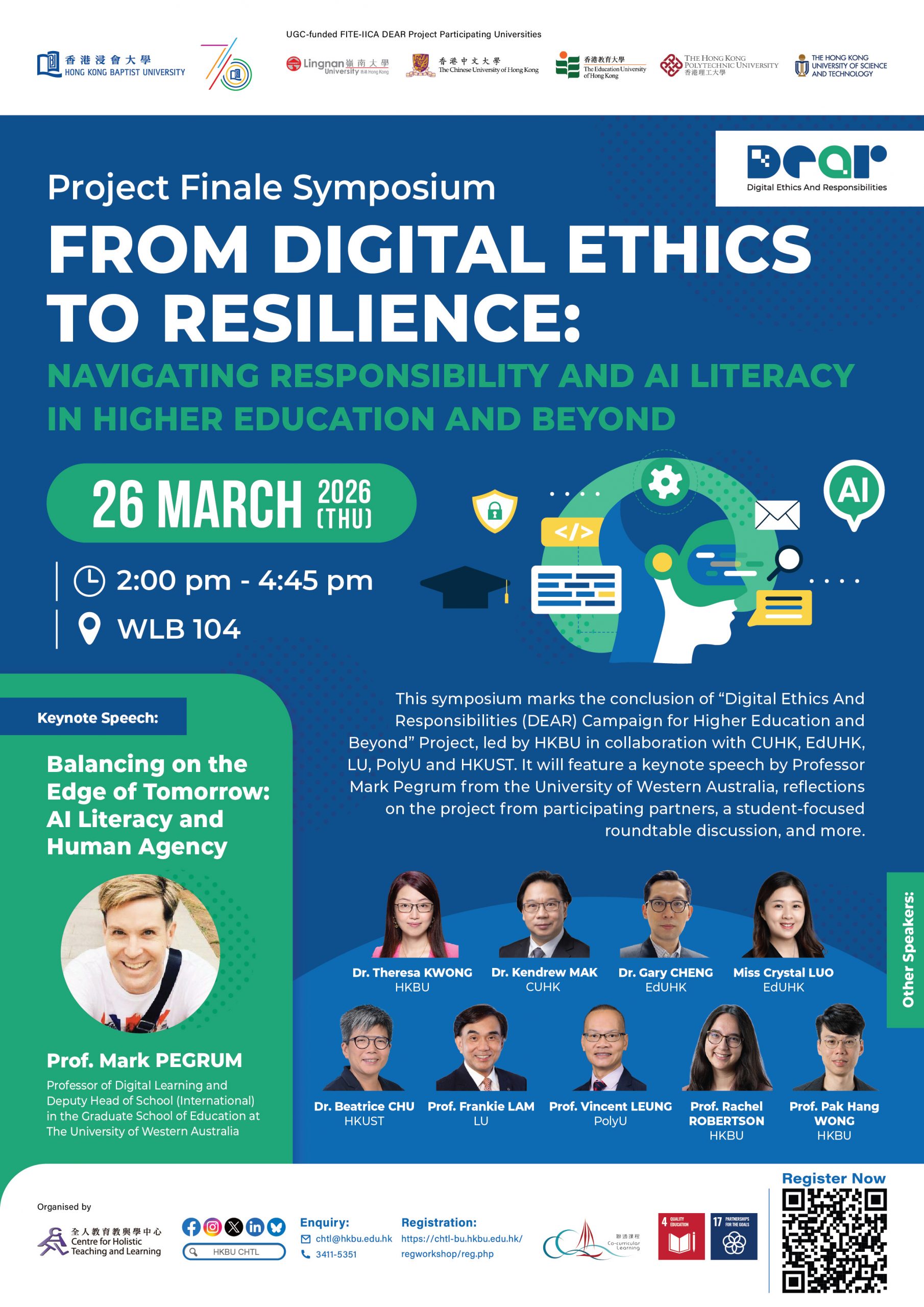
DEAR Project Finale Symposium
From Digital Ethics to Resilience: Navigating Responsibility and AI Literacy in Higher Education and Beyond
Date & Time:
26 March 2026 (Thursday), 2:00 pm to 4:45 pm
Venue:
WLB104, The Wing Lung Bank Building for Business Studies, Hong Kong Baptist University
Overview:
This symposium marks the conclusion of “Digital Ethics And Responsibilities (DEAR) Campaign for Higher Education and Beyond” Project, led by HKBU in collaboration with CUHK, EdUHK, LU, PolyU and HKUST. It will feature a keynote speech by Professor Mark Pegrum from the University of Western Australia, reflections on the project from participating partners, a student-focused roundtable discussion, and more.
Keynote Speaker:

Professor Mark PEGRUM
Professor, Digital Learning
Deputy Head of School (International), Graduate School of Education
The University of Western Australia
Title:
Balancing on the Edge of Tomorrow: AI Literacy and Human Agency
Speakers:

Dr Theresa KWONG
DEAR Project Leader
Centre for Holistic Teaching and Learning
Hong Kong Baptist University
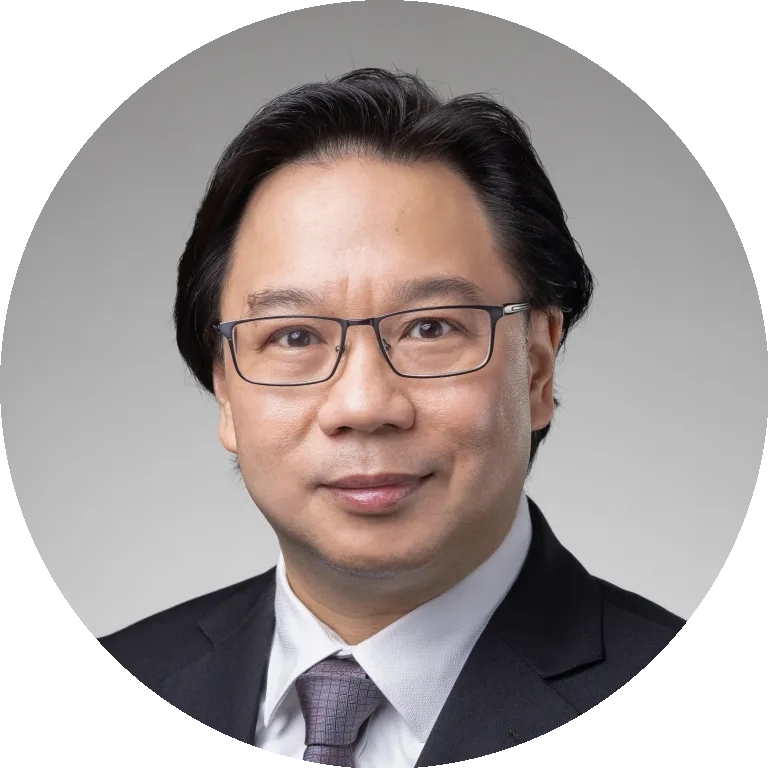
Dr Kendrew MAK
DEAR Project Collaborator
The Chinese University of Hong Kong

Dr Gary CHENG
DEAR Project Collaborator
The Education University of Hong Kong

Miss Crystal LUO
DEAR Project Collaborator
The Education University of Hong Kong

Dr Beatrice CHU
DEAR Project Collaborator
The Hong Kong University of Science and Technology
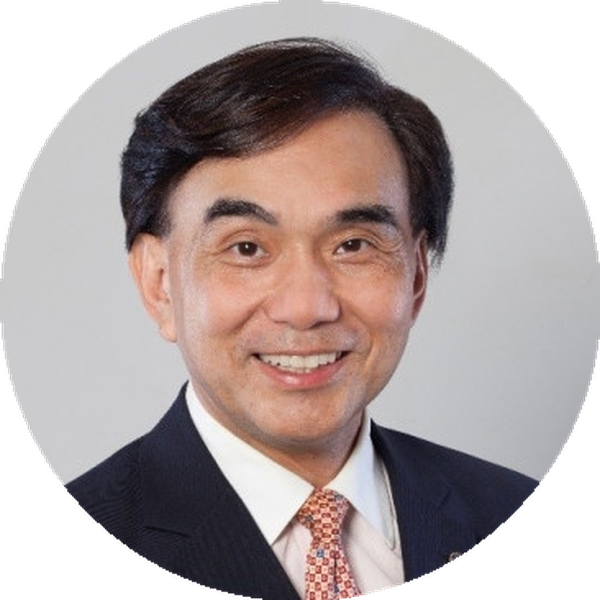
Professor Frankie LAM
DEAR Project Collaborator
Lingnan University
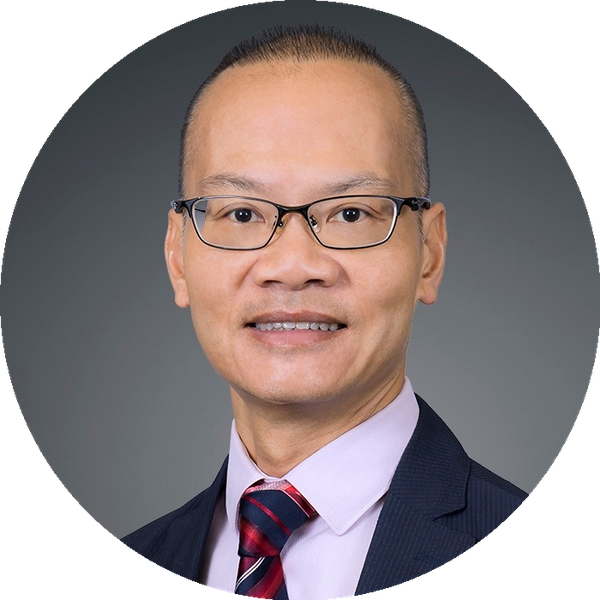
Professor Vincent LEUNG
DEAR Project Collaborator
The Hong Kong Polytechnic University

Professor Rachel Siow ROBERTSON
Digital Ethics Expert
Hong Kong Baptist University
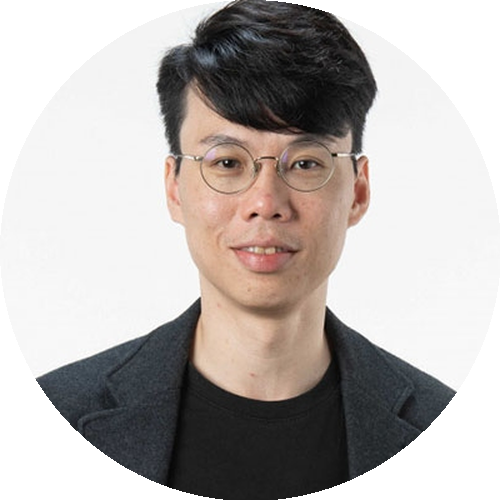
Professor Pak Hang WONG
Digital Ethics Expert
Hong Kong Baptist University
Sustainable Development Goals (SDG) Mapping
Symposium Materials
Handouts (PDF)


Learn more
For event details, speaker lineups, and registration, please contact us.